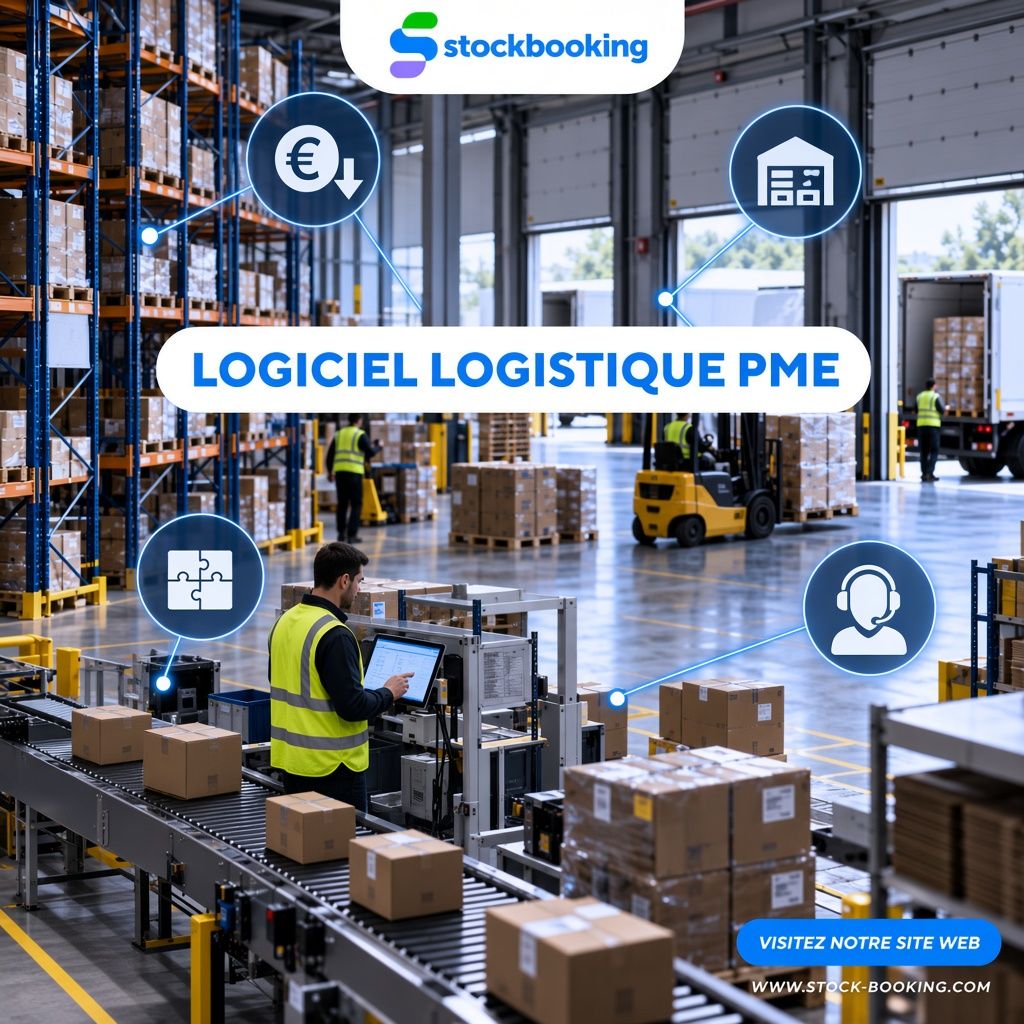
Choosing logistics software as an SME leader has nothing in common with a large-group IT programme. The budget is tighter, teams are more versatile, and a poorly calibrated decision is paid for in cash for months—sometimes years, while you justify a tool change to management. Here is how to structure that choice methodically, rather than going with the most visible solution or the one sold by the first salesperson you meet.
Why this choice is structural for an SME
Logistics software is not just a stock-management tool: it conditions picking reliability, customer satisfaction and, ultimately, your ability to absorb growth without hiring at the same pace. In an SME, unlike a large group, there is usually no dedicated IT team that can absorb the flaws of a poorly chosen tool through endless corrective development. The tool must therefore work properly from day one, with the level of support available internally.
The cost of a bad choice is not limited to the licence price. It is also measured in hours spent working around the tool’s limits, picking errors that damage customer relationships, and poorly valued inventory that distorts purchasing decisions. Over a year, these indirect costs often far exceed the price gap between two competing solutions.
The decision grid: 4 criteria to assess before you choose
The real budget, not just the advertised price
Beyond the subscription or licence, always include initial setup, team training and annual maintenance. An undersized “entry-price” solution often ends up more expensive than a complete solution from the start, once specific developments and separately billed support hours are added. Always ask for a three-year total, not just the monthly rate on the homepage.
The size and complexity of your warehouse
A 500 m² site with 200 SKUs does not have the same needs as a 3,000 m² site with multi-channel picking and marked seasonal peaks. The number of locations, inventory turnover and daily order volume determine the level of functionality that is actually useful. There is no point paying for voice picking or automated cross-docking if current volumes do not justify it—but you also need to check that the solution can keep up if activity doubles within two years.
Integrations with your existing ecosystem
ERP, e-commerce platform, carriers, invoicing tool: logistics software that does not communicate natively with your current tools generates manual re-entry, a source of errors and lost time. Before any sales demonstration, list all of your business tools and ask each vendor to demonstrate a live connection with at least two or three of them—not just a promise on a brochure.
Support over the long term
Responsive support and a team that understands SME operational constraints (no dedicated internal IT, versatile staff, unpredictable peaks) often matter more than a few extra features that are never used. Ask existing customer references about the real quality of support, not only contractual response times.
Common mistakes to avoid
- Oversizing the tool “just in case”. Many SMEs choose a solution designed for volumes far above their own, in case the company grows fast. The result is setup and usage complexity that slows teams from day one, for a hypothetical benefit that may never materialise.
- Choosing on price alone. Conversely, picking the cheapest solution without checking its ability to scale often means migrating everything 18 to 24 months later—with the cost of migration, retraining and operational interruption that this implies.
- Neglecting shop-floor training. The best software on the market is worth nothing if operators quietly return to spreadsheets after three weeks because onboarding was insufficient.
- Skipping a real-world test. Validating a tool on a standardised sales demo, without testing it on a real sample of your own SKUs and flows, exposes you to unpleasant surprises once the contract is signed.
Which software depending on your company’s maturity?
SMEs starting out in logistics
Still on spreadsheets or a basic tool, these companies first benefit from structuring their fundamental flows—receiving, storage, picking—before considering advanced features. The priority is basic reliability, not sophistication.
Already structured SMEs
With several pickers and growing order volume, these companies are looking for an SME WMS that can absorb the load without excessive deployment complexity, with a measurable productivity gain on order picking.
Multi-site or multi-brand SMEs
These companies are already approaching the traceability and consolidated reporting issues found among logistics providers: the need to run several warehouses, sometimes several internal brands, with a unified view of inventory.
In every case, the safest way to lock in this choice is to start from an objective logistics diagnostic of your current situation rather than a wish-list of features. That is often where the most profitable short-term logistics optimization levers are found.
In short
The right logistics software for an SME is not the most complete one, but the one that matches your volume, budget and current operational maturity. A prior diagnostic avoids most selection mistakes and secures the investment over the long term.
Frequently asked questions
How much does logistics software cost for an SME?
Cost varies widely with volume and the level of integration required, but you should always think in total cost over three years (licence, setup, training, maintenance) rather than an isolated monthly price.
Do you need a WMS from day one?
No: a full SME WMS is justified once basic flows are stable and order volume makes manual management genuinely time-consuming or a source of repeated errors.
How long does it take to deploy logistics software in an SME?
For a solution sized to the company, deployment is generally measured in weeks, not months—provided you do not aim for too wide a functional scope on day one.